The Cyber Battlefield Is Here. But Are We Training for It?
Blog / 4 min read / Saurav Singh
Learn how critical infrastructure cybersecurity, cyber range simulation, and real-time incident response training help organizations prepare for modern cyber warfare, nation-state attacks, and advanced cyber threats. This blog post discusses the multiple advantages of using an integrated cybersecurity solution, as well as its effectiveness in combating changing cyber threats.
For a long time, cyberattacks felt detached. Something for the IT team to handle. Something that mostly meant data loss, maybe some downtime, a bad quarter. Leadership would hear about it in a post-incident report. The business would move on.
That's not the world we're in anymore.
This Is Bigger Than Cyber Crime
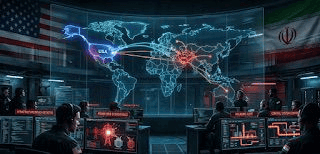
Look at what's happening globally Ukraine, the Middle East, the South China Sea, ongoing tensions across Eastern Europe and the Indo-Pacific and one thing becomes clear: cyber security is no longer a supplementary tool.
It is a primary instrument of conflict, competition, and attack.
Not a side activity it’s a strategy now.
Nation-states are no longer just stealing data. They are pre-positioning inside critical infrastructure systems waiting, mapping, and in some cases already capable of triggering disruption on demand. We've seen documented attempts, and in several cases successful intrusions, targeting:
- Power grids and energy distribution networks, with the intent to cause blackouts affecting millions.
- Water treatment and sanitation systems, where manipulation of chemical dosing could have direct public health consequences.
- Ports, rail, and logistics hubs, where even brief disruption cascades across supply chains within hours.
- Telecommunications and satellite infrastructure, affecting both civilian communication and military coordination.
This logic is quite on point. You don't need to win a conventional war if you can make a society unable to function.
Disable the power. Freeze the supply chain. Create enough chaos that governments are forced to respond internally rather than externally.
This is sometimes called grey zone warfare activity that sits below the threshold of a formal act of war but causes real, measurable harm.
The targets aren't just military. They're civilian. They're commercial. They're the organisations that keep everyday life running and critical infrastructure protection has quietly become the new frontline. And most of the people responsible for defending it don't yet think of themselves as being in a war.
Here's the Uncomfortable Part
Ask most organisations whether they're prepared for a serious cyberattack, and the honest answer is on paper, yes. In practice, probably not.
Most have invested in the right tools firewalls, endpoint detection and response, SIEM platforms, threat intelligence feeds, vulnerability scanning, regular penetration testing.
The security stack looks solid in a board presentation. But tools are only part of the equation and in most real incidents, they aren't where the failure occurs.
The failures happen in the spaces between the tools. Like:
- Who's in charge when something goes wrong?
- Is it the CISO?
- The CIO?
- The COO?
- Does IT own the response, or does operations?
If the answer is "it depends," that's a problem because in a real incident, confusion about ownership costs time and time is the one thing you don't have.

We’re seeing this play out right now. In a recent escalation tied to ongoing geopolitical tensions, an Iran-linked hacking group breached the personal email account of FBI Director Kash Patel publicly leaking emails, documents, and private photos in what’s known as a “hack-and-leak” operation.
Notably, this wasn’t a breach of FBI systems. It was a personal account. And yet, it still created reputational impact, intelligence exposure, and strategic signalling in an active cyber conflict.
Real Attacks Don't Look Like the Movies
Most people imagine something visible and dramatic systems going dark, alarms triggering, an obvious and immediate crisis. Real attacks rarely announce themselves that way.
In most documented major incidents, the early indicators were indirect.
- A slight anomaly in network traffic.
- An alert that fired.
- A system behaving a little slower than usual.
- A user account doing something slightly outside its normal pattern.
- Data that looked almost right but not quite.
These signals are easy to miss. Skilled attackers know this. They deliberately operate at the edge of what's detectable, moving slowly enough to avoid triggering automated responses, staying patient enough to map the environment before doing anything that might reveal their presence.
By the time an attack becomes unquestionable, the adversary has often been inside the environment for weeks or months. The initial compromise is long past. The real question at that point isn't how they got in it's how much they've already done, and what they're waiting to do next.
Most teams, if they're being honest, have never actually practised responding to something like that.
This Is Where Most Organisations Are Unprepared
The gap isn't in awareness. Most security leaders understand the threat landscape. The gap is in practised, tested, real-time incident response capability.
You can't learn how to respond to a serious cyberattack by reading about it. You can't prepare your organisation by writing a policy document or running a tabletop exercise where everyone sits around a conference table and talks through what they'd theoretically do. Real pressure reveals things that no amount of planning anticipates. Who freezes and who acts. Which communication channels work and which ones fail. The gaps between what the playbook says and what's possible in the moment. The decisions no one thought to pre-authorise. The systems that turned out to be more interconnected than anyone realised.
You can't manufacture that kind of learning from a document. You must experience it.
That's Exactly Why Cyber Ranges Exist
A cyber range platform is a high-fidelity simulation environment designed to replicate the conditions of a real cyberattack without any of the real-world consequences.
The environment mirrors production systems. Attack scenarios are drawn from actual threat intelligence the same techniques, tactics, and procedures used by real adversaries, including nation-state actors. The teams that respond are the actual teams who would respond in a real incident: security analysts, IT operations, senior leadership, communications, legal sometimes third-party partners and vendors.
The exercise runs in real time. Not a discussion. Not a walkthrough. A live simulation where decisions must be made under pressure, with incomplete information, against a clock.
What surfaces in these exercises consistently, across organisations of every size and sector:
- Communication breaks down faster than anyone expects.
- Decision-making slows dramatically under pressure.
- Detection is slower than assumed.
- Recovery takes longer than planned.
None of this reflects incompetence. It reflects reality that responding to a serious cyberattack is genuinely hard, and that the difficulty only reveals itself under realistic conditions.
The value of a cyber range isn't just the exercise itself. It's what the exercise makes visible. The gaps, the friction points, the assumptions that don't hold all of these become addressable once they're identified. The organisation that has been through a serious simulation is fundamentally different from the one that hasn't. Not because its tools changed, but because its people have a shared experience of pressure and that changes how they perform when the real thing arrives.
That’s Why We Built WhizRange
At WhizHack Technologies, we saw the same pattern across industries. Organizations had tools. They had controls. They had policies. But they hadn’t rehearsed.
That’s where WhizRange Cyber Range Platform makes the difference. WhizRange is a** hyper-realistic Cyber Range platform** built on micro service architecture designed to simulate real-world attack scenarios in safe, controlled environments. It delivers immersive, hands-on environments tailored for education, enterprises, government, defense, and critical infrastructure industries. Instead of generic practice labs, we deploy a customized environment for scenario planning and cyber resilience validation.
WhizRange includes:
- Realistic simulated training environments for huge scale
- Red Team vs Blue Team exercises
- CTF challenges across IT, OT and sector-specific domains
- Digital twin replication of enterprise IT and OT networks
Because breaches don’t test knowledge. They test readiness.
Final Thought
The battlefield is already here. The adversaries are already inside some of the networks that power our economies, our infrastructure, and our public services. The question isn't whether your organisation will face a serious cyber event. The question is whether the people responsible for responding will have ever experienced anything like it before.
There's a real difference between an organisation that has tested itself under realistic conditions that has felt the pressure, found the gaps, and built genuine response capability and one that's running on documentation, assumptions, and hope.
The first time should not be the real thing.
Before you move on, ask yourself:
- If a real incident started right now, would your team know exactly what to do in the first 15 minutes?
- When was the last time your organisation practised a live, high-pressure cyberattack simulation?
- Are your response plans tested under real conditions, or just documented on paper?
- How quickly can your team detect subtle anomalies before they become full-scale breaches?
- If attackers are already inside your systems, would you know and how long would it take to find out?