The failure usually begins long before the incident during design, policy rollout, or a well-meaning security hardening exercise. This blog post discusses the multiple advantages of using an integrated cybersecurity solution, as well as its effectiveness in combating changing cyber threats.
Why Traditional IT Security Controls Often Fail in OT Environments
Most OT outages blamed on “cyber incidents” are not caused by attackers alone.
They’re caused by how we respond, what controls we deploy, and what assumptions we carry over from IT.
The failure usually begins long before the incident during design, policy rollout, or a well-meaning security hardening exercise.
And when it fails, it doesn’t fail loudly.
It fails quietly, operationally, and expensively.
The Core Problem No One Likes to Say Out Loud
IT security and OT operations were never meant to share the same playbook.
IT environments are built on assumptions like:
- Systems can reboot
- Downtime is inconvenient, not dangerous
- Security controls can interrupt workflows
OT environments are built on very different assumptions:
- Systems must run continuously
- Downtime can create safety hazards
- Control logic must behave predictably
When we apply IT security controls without questioning those assumptions, security becomes a destabilising force.
Where IT Controls Break OT — In Painfully Real Ways
1. Network Segmentation That Breaks the Process, Not the Attack
From an IT perspective, network segmentation is one of the strongest defenses:
- Restrict traffic
- Limit lateral movement
- Enforce strict trust boundaries
From an OT perspective, segmentation without process awareness can:
- Delay or block control signals
- Disrupt synchronisation between systems
- Create intermittent faults that are almost impossible to diagnose
What Happens in the Field
- Firewall rules are written based on IPs, not process dependencies
- “Unknown” traffic is blocked because it looks suspicious
- Changes are validated in spreadsheets, not on live processes
The result is rarely an immediate outage.
Instead, you get:
- Random HMI freezes
- PLCs dropping connections
- Operators losing confidence in automation
Eventually, someone says:
"Security is causing instability."
And once that belief sets in, security loses.
2. SOC Visibility That Stops at the Network Edge
Traditional Security Operations Center (SOC) tools are excellent at detecting:
- Credential misuse
- Malware behavior
- Lateral movement
They are far less effective at detecting:
- Legitimate commands issued at the wrong time
- Small configuration changes with large physical impact
- Subtle manipulation of control logic
So alerts look harmless:
- No malware
- Valid credentials
- Known protocol
But in Operational Technology environments, intent matters more than technique.
By the time the impact is visible:
- Processes are already affected
- Options are limited
- Panic starts to creep in
This is why OT visibility, protocol-aware monitoring, and industrial threat detection are becoming critical requirements for modern critical infrastructure security programs.
What Actually Works in OT Security
1. Design for Availability First
If a control threatens uptime, it will not survive reality.
Security must:
- Preserve predictable behavior
- Respect process timing
- Avoid introducing instability
This doesn’t weaken security.
It makes it sustainable.
Modern OT cybersecurity strategies prioritise operational continuity alongside threat protection.
2. Use Compensating Controls
When patching or endpoint agents aren’t feasible:
- Network-based detection
- Protocol-aware monitoring
- Strong change control
- Passive monitoring
Security shifts from prevention-only to resilience-focused.
This approach is particularly important for:
- Industrial Control Systems (ICS)
- SCADA environments
- Manufacturing facilities
- Energy utilities
- Critical infrastructure networks
3. Merge SOC Awareness with Operational Reality
SOC teams need:
- Context, not just alerts
- Clear escalation paths to operations
- Defined “do not automate” actions
OT incidents cannot be handled in isolation.
Because that’s what real incidents look like.
The most successful organisations integrate:
- OT security teams
- Engineering teams
- Operations teams
- Security Operations Centres (SOCs)
into a unified response framework.
India’s First Full-Stack OT Cybersecurity Platform
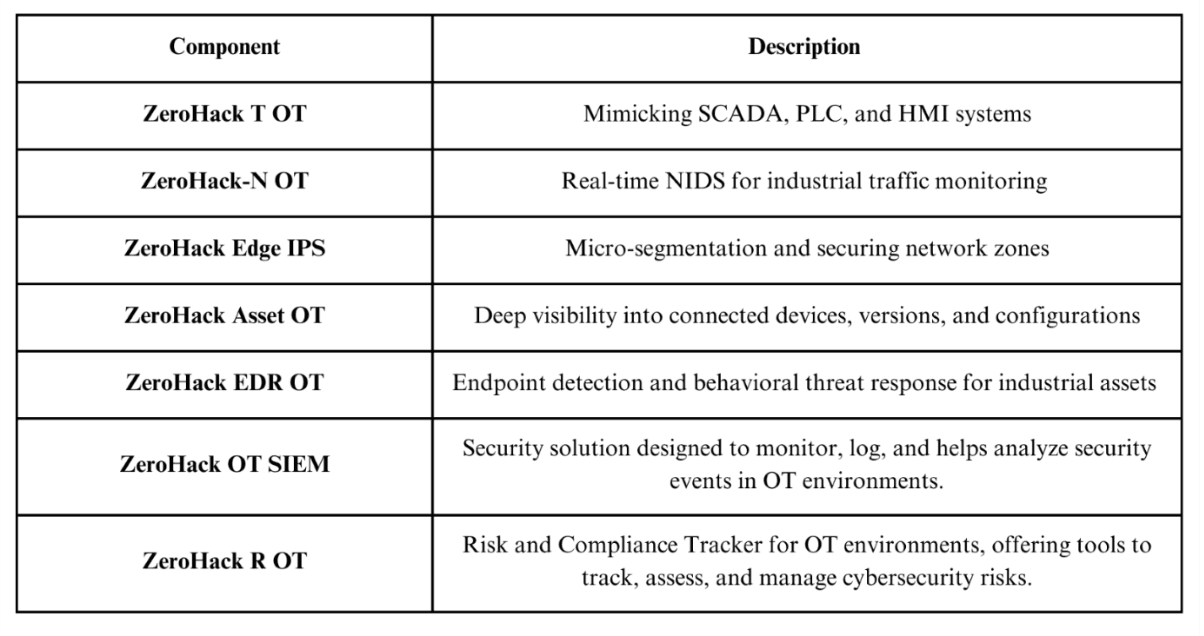
To overcome all this, presenting India’s First and Only Full-Stack OT Cybersecurity Platform.
WhizHack Technologies delivers the nation’s first complete OT security portfolio, ZeroHack, engineered to safeguard critical infrastructure, industrial facilities, manufacturing plants, utilities, transportation systems, and operational control environments.
Whether you operate a private facility, manage regional operations, or oversee large-scale critical infrastructure, we help you secure the systems that keep operations safe, resilient, and continuously available.
Explore Related Solutions
Final Thought
OT security doesn’t fail because teams don’t care.
It fails because we force one world’s solutions onto another world’s problems.
Security that disrupts operations will always lose.
Security that understands operations can protect them.
That’s not a tooling problem.
It’s a mindset shift.
Because in OT, trust breaks long before systems do.
Questions This Brings to the Table
- If something went wrong in your OT environment today, would anyone immediately think “cyber,” or would it be treated as a process or equipment issue first?
- Do you really know who has access to your OT systems right now, why they have it, and whether they still need it—or is it mostly based on past decisions?
- When a new security control is introduced, does anyone ask how it will behave during peak operations, faults, or recovery—or is that discovered the hard way?
- Are OT security decisions being made to protect operations, or mainly to satisfy audits and compliance requirements?
- If security started causing instability, would operators trust the security team to fix it—or would they look for ways around it?
We are happy to schedule a call with our OT security experts before it’s too late.
We are happy to schedule a call with our OT experts before it’s too late. Please write to us at info@whizhack.com.