Why Critical Infrastructure Is Becoming a Cyber Battlefield
Blog / 4 min read / Saurav Singh
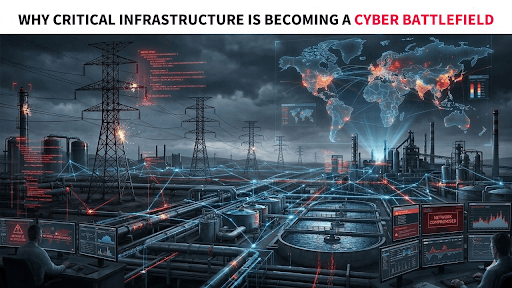
The focus increasingly shifts toward critical infrastructure cybersecurity and the systems that support economies and daily life. This blog post discusses the multiple advantages of using an integrated cybersecurity solution, as well as its effectiveness in combating changing cyber threats.
For years, cyber-attacks were mostly about data.
- Stealing information.
- Leaking emails.
- Locking systems with ransomware.
But something has quietly changed.
Today, the real targets are no longer just databases or laptops. They are the systems that keep countries running.
- Power grids.
- Water plants.
- Oil pipelines.
- Manufacturing facilities.
In other words, critical infrastructure. And recent geopolitical tensions are showing us exactly why.
Cyber Conflict Is No Longer Just Digital
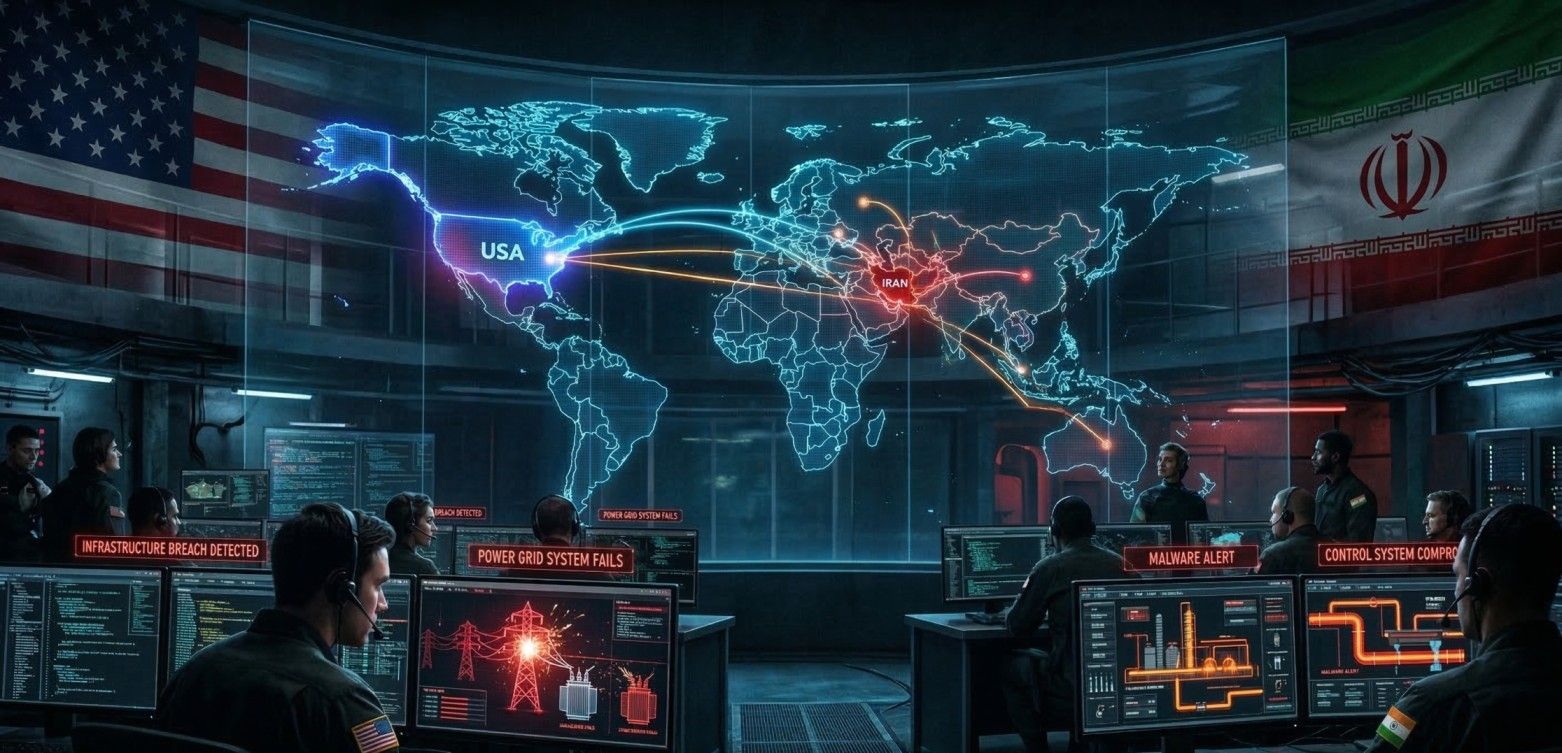
Look at the cyber tensions surrounding Iran and Israel over the past few years.
Several incidents reported in the public domain involved attempts to target:
- Water facilities
- Ports
- Industrial systems
- Critical infrastructure networks
These weren’t just attempts to steal information.
They were attempts to affect operations.

Similarly, tensions involving Venezuela and U.S. interests have repeatedly highlighted how vulnerable energy infrastructure, national utilities, and operational technology (OT) environments can be during geopolitical conflicts.
When cyber pressure escalates between nations, the targets are no longer just government websites.
The focus increasingly shifts toward critical infrastructure cybersecurity and the systems that support economies and daily life.
Disrupting those systems can create enormous pressure without firing a single weapon.
Why Critical Infrastructure Is Such a Powerful Target
Think about it.
If a company loses data, it’s serious.
If a power grid fails, entire cities feel it.
Critical infrastructure affects:
- Energy supply
- Transportation
- Manufacturing
- Water availability
- Economic stability
- Public safety
That’s why attackers see these systems as strategic targets.
The objective is not always destruction.
Sometimes it’s influence.
Sometimes it’s disruption.
Even a small operational issue can create widespread uncertainty.
This is why industrial cybersecurity and critical infrastructure protection have become national priorities worldwide.
The Problem: OT Systems Were Never Built for Today’s Threat Landscape
Most industrial environments were designed decades ago.
Back then, cybersecurity wasn’t part of the design conversation.
The assumption was simple:
- Systems were isolated
- Networks were closed
- Operators were trusted
But today those systems are increasingly connected to:
- Corporate IT networks
- Remote vendor access
- Cloud services
- Digital transformation initiatives
- Smart monitoring platforms
Every new connection improves efficiency.
But it also increases exposure.
And once attackers reach an Operational Technology (OT) environment, the consequences can move from digital to physical.
This is one of the biggest challenges facing OT cybersecurity today.
The Most Dangerous OT Cyber Attacks Are Often the Quietest Ones
When people think of cyber-attacks, they often imagine something dramatic.
Systems shutting down.
Alarms are going off.
Screens flashing red.
But attacks on industrial environments often look very different.
Instead of obvious disruption, attackers might:
- Modify process parameters
- Manipulate operational data
- Delay alarm responses
- Alter industrial control system settings
- Change sensor readings
To the operations team, it might look like:
- A technical glitch
- A sensor issue
- A configuration error
- A maintenance problem
But behind the scenes, it could be a sophisticated industrial cyber attack.
By the time cyber involvement becomes obvious, the impact may already be unfolding.
This is why OT threat detection and behaviour-based monitoring are becoming essential components of modern industrial security programs.
Why Traditional Cybersecurity Doesn’t Always Work in OT Environments
Most cybersecurity strategies were built for IT environments.
In IT, the assumptions are simple:
- Systems can reboot
- Patches can be applied frequently
- Security agents can run everywhere
- Downtime is manageable
But industrial environments operate differently.
In OT:
- Systems must run continuously
- Downtime impacts production
- Downtime can create safety risks
- Processes must remain predictable
- Industrial assets often cannot be patched easily
If a security control interrupts operations, it quickly loses trust from the people running the facility.
And once that trust is lost, security teams face an uphill battle.
This is why** Operational Technology Security** requires a fundamentally different approach than traditional IT security.
What Governments and Organisations Need to Start Thinking About
Protecting critical infrastructure today requires a different mindset.
It starts with understanding that OT Security is not simply an extension of IT security.
Organisations need to focus on:
Visibility
Many organisations still lack a complete inventory of assets within their OT networks.
Without visibility, security becomes guesswork.
Process Awareness
Security teams must understand industrial processes, not just devices and protocols.
Understanding operational impact is critical.
Collaboration Between Security and Operations
OT engineers and cybersecurity teams must work together.
Industrial cybersecurity cannot succeed in silos.
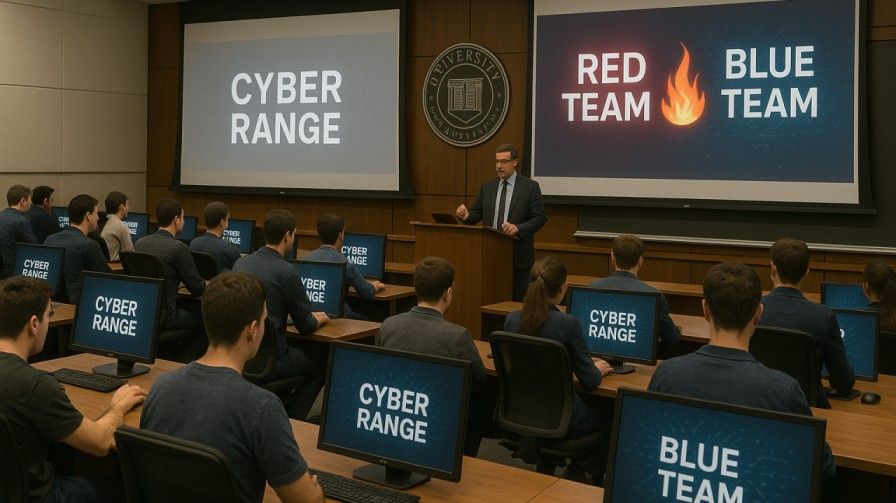
Scenario Testing
Organizations should regularly simulate cyber incidents and operational disruptions to understand how teams respond under realistic conditions.
Testing improves preparedness, resilience, and recovery.
India's First Full-Stack OT Cybersecurity Platform
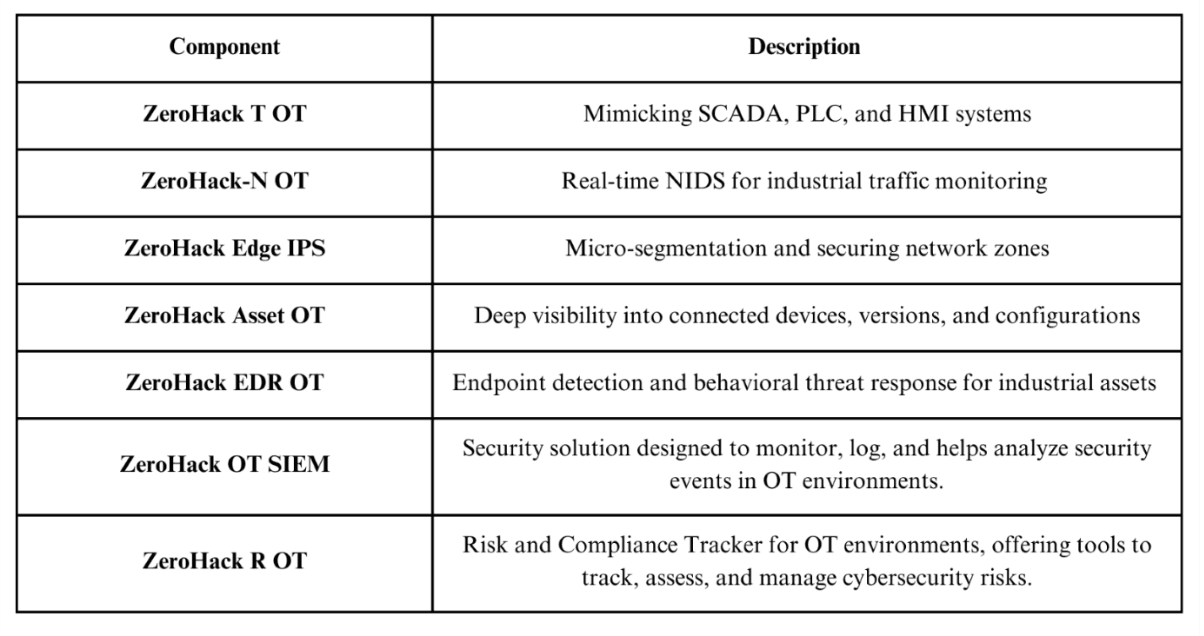
To overcome these challenges, WhizHack Technologies delivers India’s First and Only Full-Stack OT Cybersecurity Platform – ZeroHack.
WhizHack’s OT cybersecurity portfolio is engineered to protect:
- Critical Infrastructure
- Industrial Control Systems (ICS)
- SCADA Environments
- Facility BMS Networks
- Energy Infrastructure
- Manufacturing Operations
- Water Utilities
- Transportation Systems
- Operational Control Environments
Whether you operate a private facility, manage regional operations, or oversee large-scale critical infrastructure, we help secure the systems that keep operations running safely and reliably.
Final Thought
Critical infrastructure has quietly become one of the most important front lines in modern cyber conflict.
Not because attackers want information.
But because these systems control real-world operations.
- Energy
- Water
- Manufacturing
- Transportation
And when those systems are affected, the impact extends far beyond the network.
For organizations responsible for these environments, cybersecurity is no longer just about protecting data.
It’s about protecting:
- Operations
- Safety
- Reliability
- Business continuity
- National resilience
Questions This Brings to the Table
- If something unusual happened in your OT environment today, would your team immediately consider a cyber cause?
- Do your security teams and operations teams share the same visibility into industrial systems?
- Are geopolitical cyber risks part of your critical infrastructure security strategy?
- Can you identify unauthorised changes to operational processes in real time?
- Would your organisation detect process manipulation before it affects production or safety?
- Do you have continuous visibility across your industrial control systems and OT assets?
We are happy to schedule a call with our OT experts before it’s too late. Please write to us at info@whizhack.com.